I'm Luz 🧑‍💻

Growth Engineer building
products at the intersection of
code, marketing & systems.

I'm also the founder of some internet projects and a Notion Ambassador in Brazil.

My story

Told in chapters.

Chapter 1

The first computer
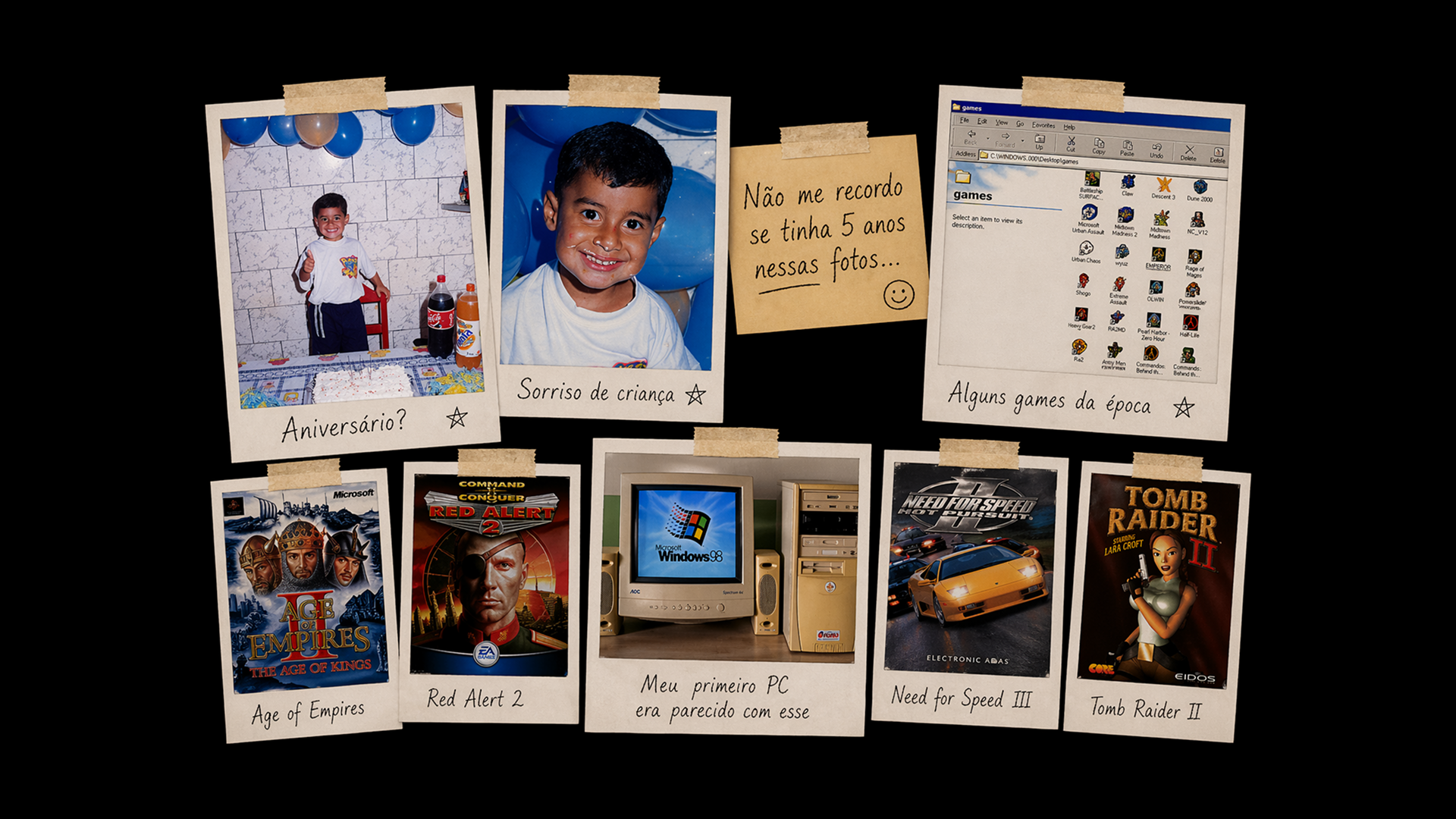
Old 90s computer
I don't have pictures of the actual PC, so I grabbed one from Google to illustrate

I was born in the previous millennium, in 1998, but my computing story really starts in 2003, when I was just 5 years old and got my first computer. One of those classics with a tube monitor that yellowed over time, made a distinct sound when turned on and took an eternity to boot up. Floppy disks scattered on the desk, the first CDs and DVDs, the first pendrive that felt like magic, the petroleum-blue Windows 98 wallpaper, and the games that shaped who I am: Age of Empires, Minesweeper, Half-Life, Counter-Strike, StarCraft, The Sims, Resident Evil and many others, those were my favorites.

Electronics always break. And since we had no internet at home, if the computer broke and we wanted to play, we had to learn how to fix it ourselves. There was no one to call, no Google to search. It was me, my brother, the computer and the will to play video games. That's how, without realizing it, my first interest in tech was born. Solving problems wasn't a task, it was a necessity. And I liked it.

At 5 years old, I had no idea that yellowed computer would be the beginning of everything.
Chapter 2

The internet

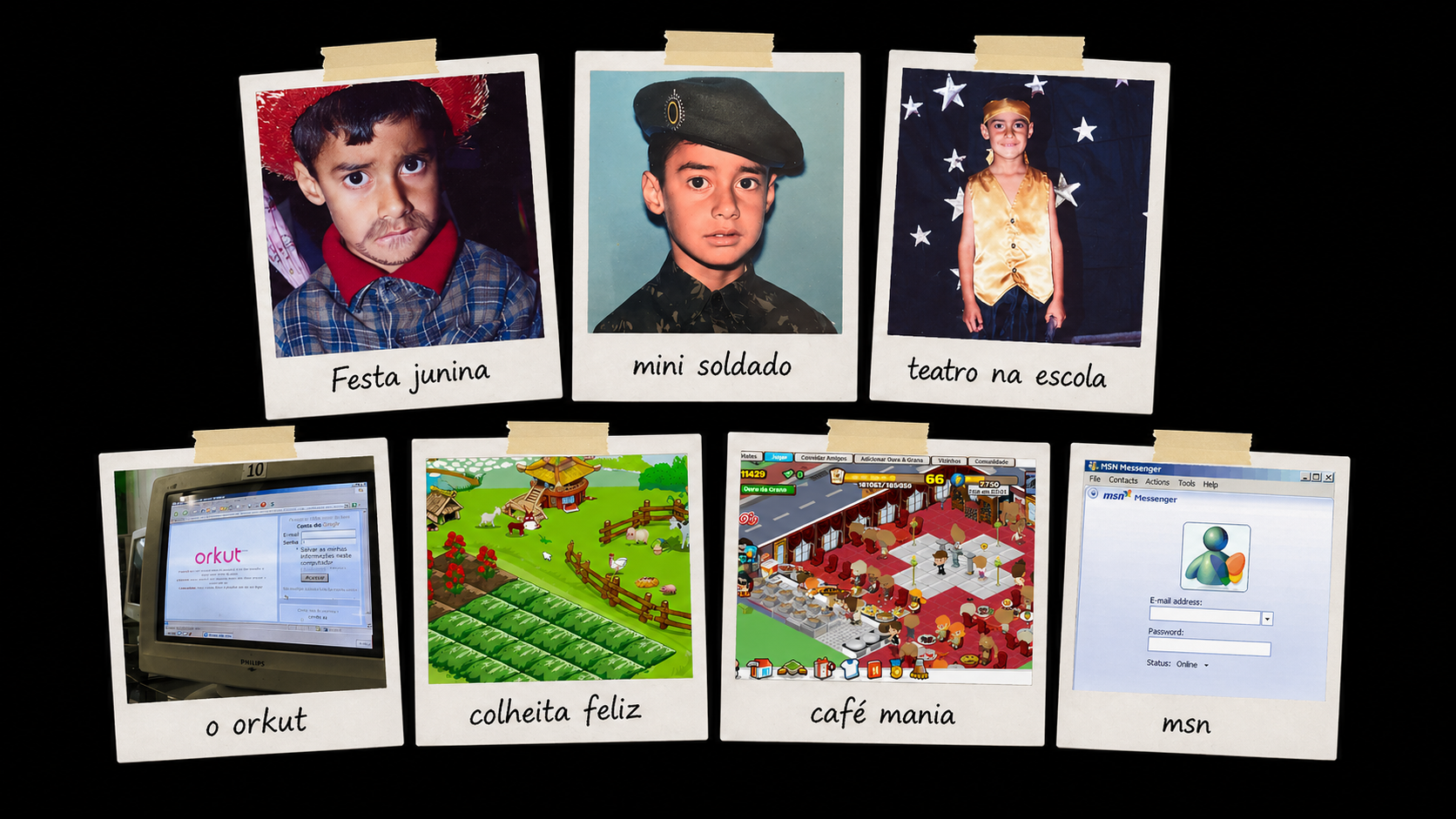
Childhood and internet memories
One of the best times of my life... yes, everyone says that

In 2008, at 10 years old, the internet arrived at home for the first time. It wasn't today's fast internet. It was a TIM modem that you'd load with a chip and plug into the PC's USB port. Slow, unstable, but enough to change everything.

With it came MSN, Orkut, YouTube and everything that unforgettable era brought. A whole new world opening up for a kid who until then only knew what fit inside the house. I had used the internet at some friends' homes before, but for me, that moment was a turning point.

And programming came along too. I discovered I could build ASCII games in the PC's terminal. They were simple, very simple, nothing like the games of the time, but enough to spark something in me: the certainty that with this knowledge, anything could be created... at least small games. It was my first contact with C, my first programming language. At 10 years old, I was already writing code without knowing that's what I was doing.

In parallel, I turned my passion for games into a blog where my friends could read reviews. I made my first YouTube video, learned a bit of Photoshop, Excel, and spent hours drawing pixel art, pixel by pixel... or at least trying. The computer had stopped being just a toy and become an entire universe of possibilities.

Chapter 3

Minecraft and curiosity

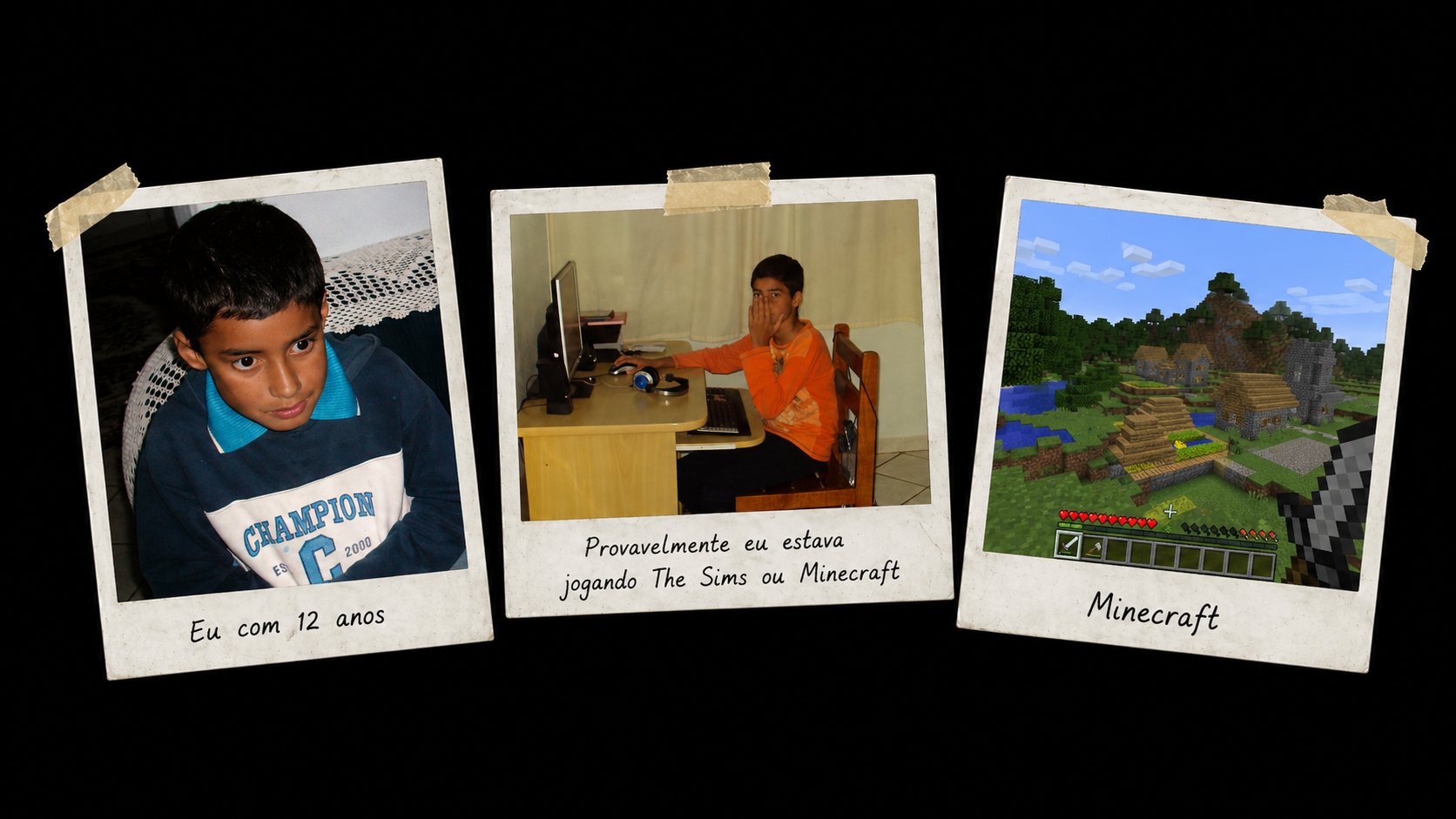
Me at 12, playing Minecraft
There was no crafting assistant. On the first night, I didn't even know how to make a torch

Around the age of 12, I discovered Minecraft. I had always been a LEGO fan, but we never had the money to buy them. In Minecraft, I could build the entire world, block by block, with no limits, no cost, no end. It was the LEGO I had always wanted, only infinite.

But as always with me, just playing wasn't enough. At that point, I wanted to understand how it worked on the inside. Not that I had managed to get anywhere near the code, Minecraft was complex and far beyond what I had learned up to then. But the will to understand already said a lot about who I was.

What Minecraft gave me wasn't technical understanding, but something perhaps more valuable at that moment: a space without limits for creativity. I built entire worlds, solved structural problems, planned before executing and reinvented when things didn't work. Introspective, observant and curious, I found in Minecraft a place where imagination was the only tool needed.

Everything in me naturally pointed toward computing, even if I still couldn't put it into words.

Chapter 4

The IT technical degree

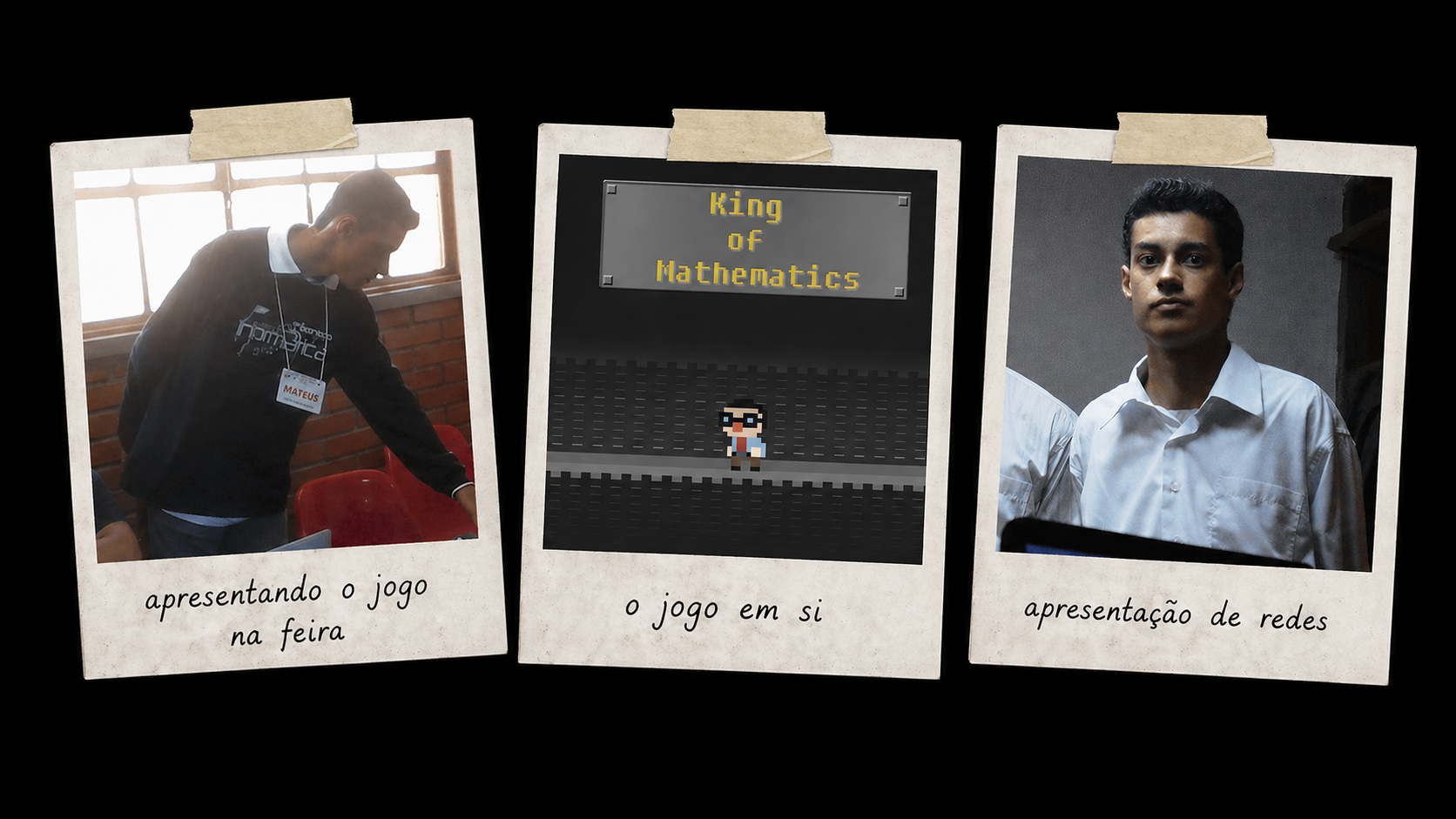
Presenting the game at the fair, King of Mathematics and a networking presentation
They forgot the H of my name in the first image

In 2013, at 15, an opportunity came up to take a technical degree in IT. I saw it as my first formal contact with programming, development and processes, a step beyond everything I had taught myself until then.

It's where I learned HTML, CSS, Java, went deeper into C and had my first contact with concepts that today are basic, but at the time were completely new: networks, servers, security, databases. It was as if every class opened a new door, and behind each door there was another hallway full of doors.

But what made it all more fun was the competition. There was a friend, who I still keep today, with whom I had an intense rivalry over who got the best grades. Sometimes I won, sometimes he won, always by the slimmest margin. That competition made me study more than any teacher could ever motivate me to.

It was also at this time that I built my first game with better graphics than the terminal ones, stepping a bit out of ASCII. It was called The King of Mathematics, a platformer where the player became a teacher and had to answer math questions to advance. It had a beginning, middle and end. It had bugs (features), including an unintentional moonwalk when you pressed both sides at once, but it was completely mine. It was presented at the IT fair and was, without me realizing, the start of something much bigger.

Chapter 5

The first business

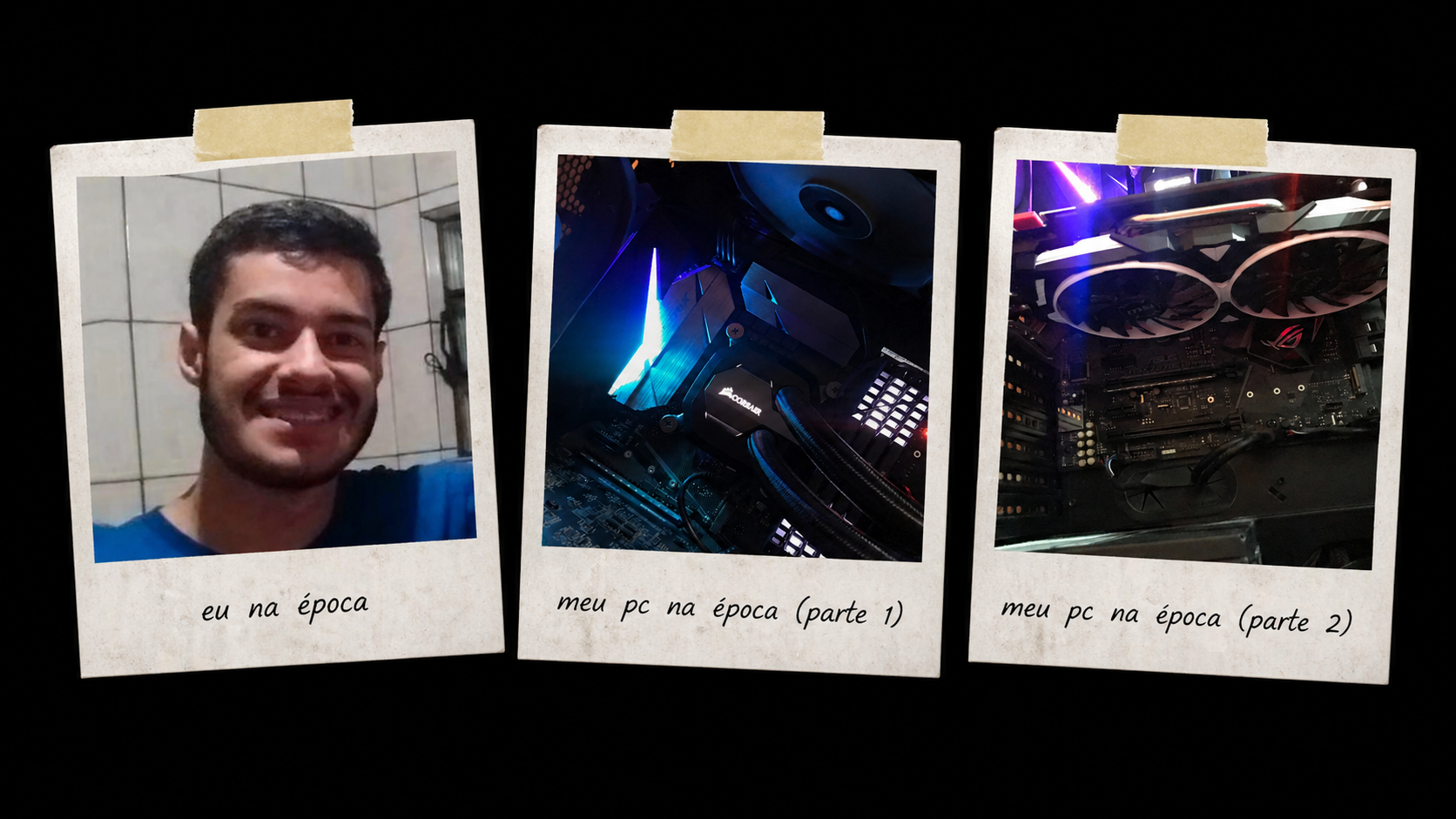
Photo of the work setup back then, or an image representing e-commerce
I made enough money to build my first gaming PC. It had 64 GB of RAM, imagine the rest

When high school and the technical degree ended, around 17 years old, almost all my friends went to college. I was lost, with no idea what I wanted to do, no clear direction. The answer had been right in front of me since I was 5. I just hadn't seen it clearly enough yet.

It was around that time that my brother started helping friends buy sports gear that in Brazil was expensive and completely out of most people's reach, but buying from abroad the prices were great. People didn't know how to buy, he did. The referrals grew, demand kept rising, until the business needed to evolve. Still without a defined direction, I started helping him on the technical side.

I built my first real website: a marketplace running 24 hours a day, 7 days a week. My brother and I would work nearly all of our waking hours. Code, marketing, customer support, strategy, all together at once, all improvised and learned in practice. My office was less than a meter from the bed where I slept.

And it was there, in that room, in that simple setup, that my point of no return happened. The simple setup came before the 64 GB of RAM one, obviously.

It wasn't a grand moment. There was no applause or spotlight. It was something quiet and deep: the realization that my skills had real use in the world. That I could turn knowledge into solutions, solutions into products and products into concrete results for other people. Until then, programming was a hobby, a curiosity, a game. In that moment, it became serious.

I balanced hard work with code, marketing, studies and video games, without leaving the house, building something from scratch with my own hands. For the first time I saw what entrepreneurship and innovation could do, and my eyes lit up in a way they never went out. To this day my eyes light up when the topic is creating, inventing, solving and innovating.

From that point on, I already knew who I was. What was still missing was finding the right environment to grow.

Chapter 6

FEPI and networking

Photo of FEPI campus or class
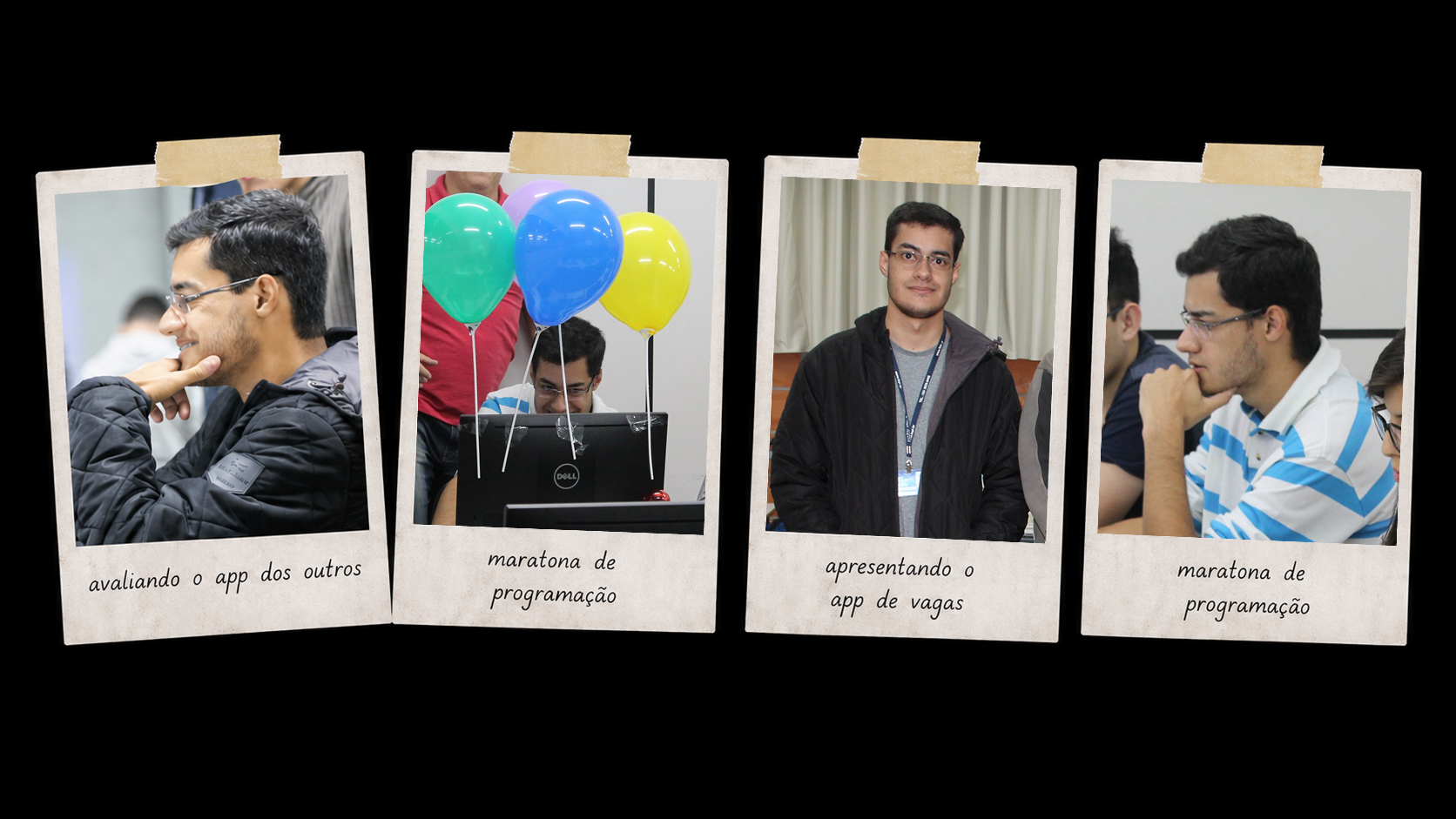
It was hard to find these photos, they were almost hidden inside 300 layers of folders

The decision to join FEPI in 2018, at 20 years old, was mixed. Partly pressure from my parents. Partly an incentive I created for myself. After everything I had lived through with my brother, I knew I could solve problems, create solutions and build products. But I wanted something the business alone couldn't give me: to be part of a network. I wanted to connect with people like me, with similar interests, who were building something. I wanted to learn from them and also teach what I knew. I wanted to grow together.

In the very first week of class, even with a lot of shyness, I forced myself to meet everyone. I went beyond my comfort zone, because I knew I was there not just to study, but to build relationships. I was elected class representative that same term.

During the course, I led the team at the Programming Marathon as the main developer while coordinating teammates through the challenges, scoring one of the highest grades in the competition. I built projects that mixed creativity and product vision: an Alexa Skill that walked users through recipes step by step with smart timers, a mini SaaS for supplier management, a real-time parking availability app, a functional cryptocurrency on a local network for study purposes and an intranet chat system, all well before the conveniences AIs offer today.

But things started slipping out of control. We couldn't reconcile the business with our studies. Quite some time later, my brother and I decided it was best to pause and focus on college. But looking ahead, at how that would help me grow, I was able to keep moving forward.

And today, looking back, I see it was the right call.

Chapter 7

The pandemic and UNIFEI

Photo representing the pandemic or moving to Itajubá
It was a very challenging year, but despite everything, it passed

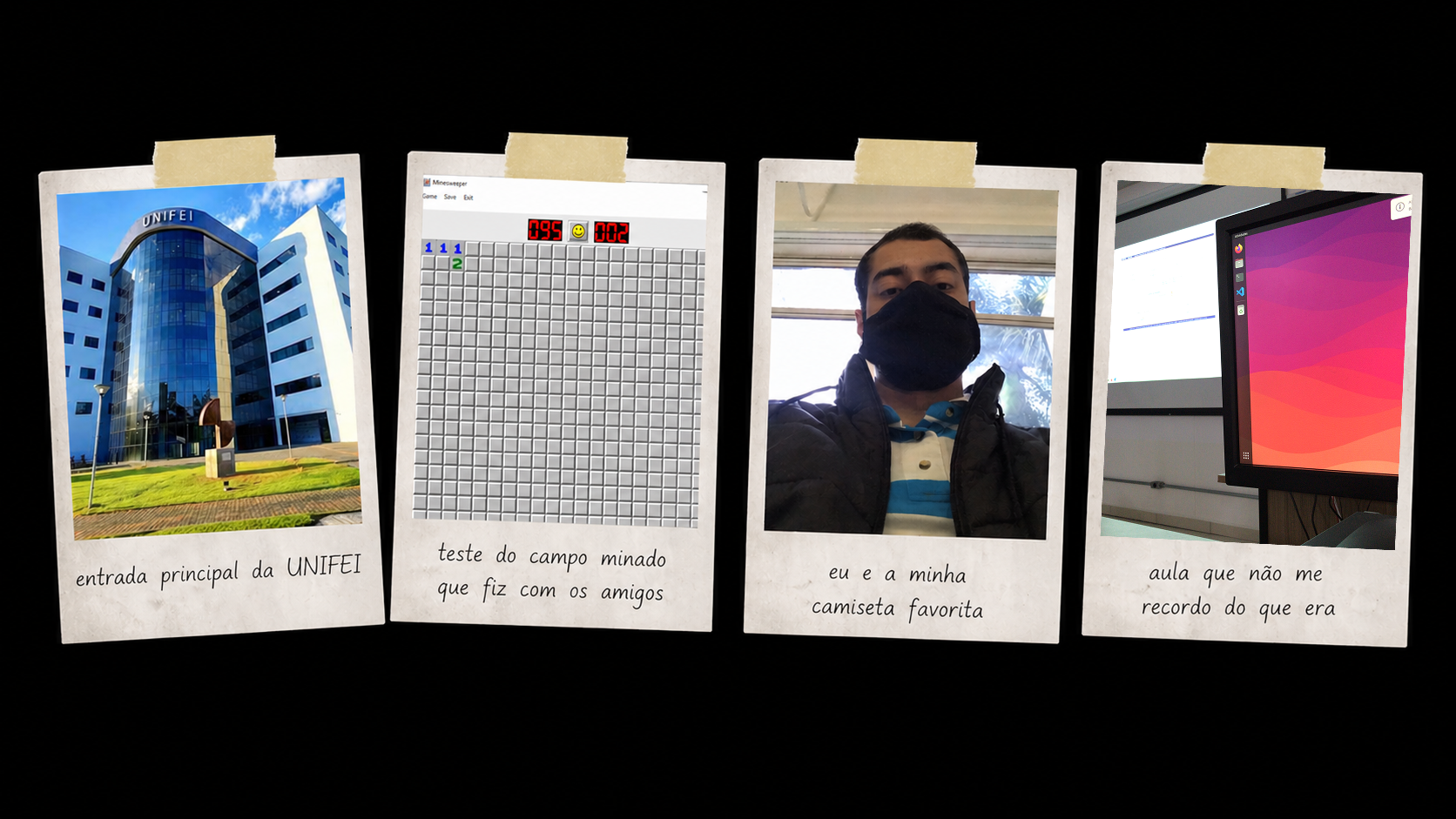
In 2020, at 22, the world stopped. The COVID-19 pandemic arrived, and with it came an opportunity that would change my path: transferring to the Federal University of Itajubá. Several friends told me I'd have access to a different kind of network there, an entrepreneurial ecosystem, people who thought the way I thought. Today FEPI also has innovation initiatives, but at the time only UNIFEI did.

At UNIFEI, I chose to take Information Systems with an emphasis in entrepreneurship. It wasn't by chance. It was the natural continuation of everything I had lived: the business with my brother, the desire to build, to solve, to connect people to solutions. Entrepreneurship wasn't just a subject for me. It was an identity I had built before I even knew how to name it.

I built practical projects that mixed technique and creativity: a multiplayer LAN game inspired by Minesweeper, one of my favorite games since childhood that I played for hours before having internet at home, 2D platformers built in Unity and terminal quiz games. I also acted as IT consultant in an entrepreneurship course, supporting real companies with technological solutions to concrete business challenges.

Chapter 8

The Entrepreneurship Center

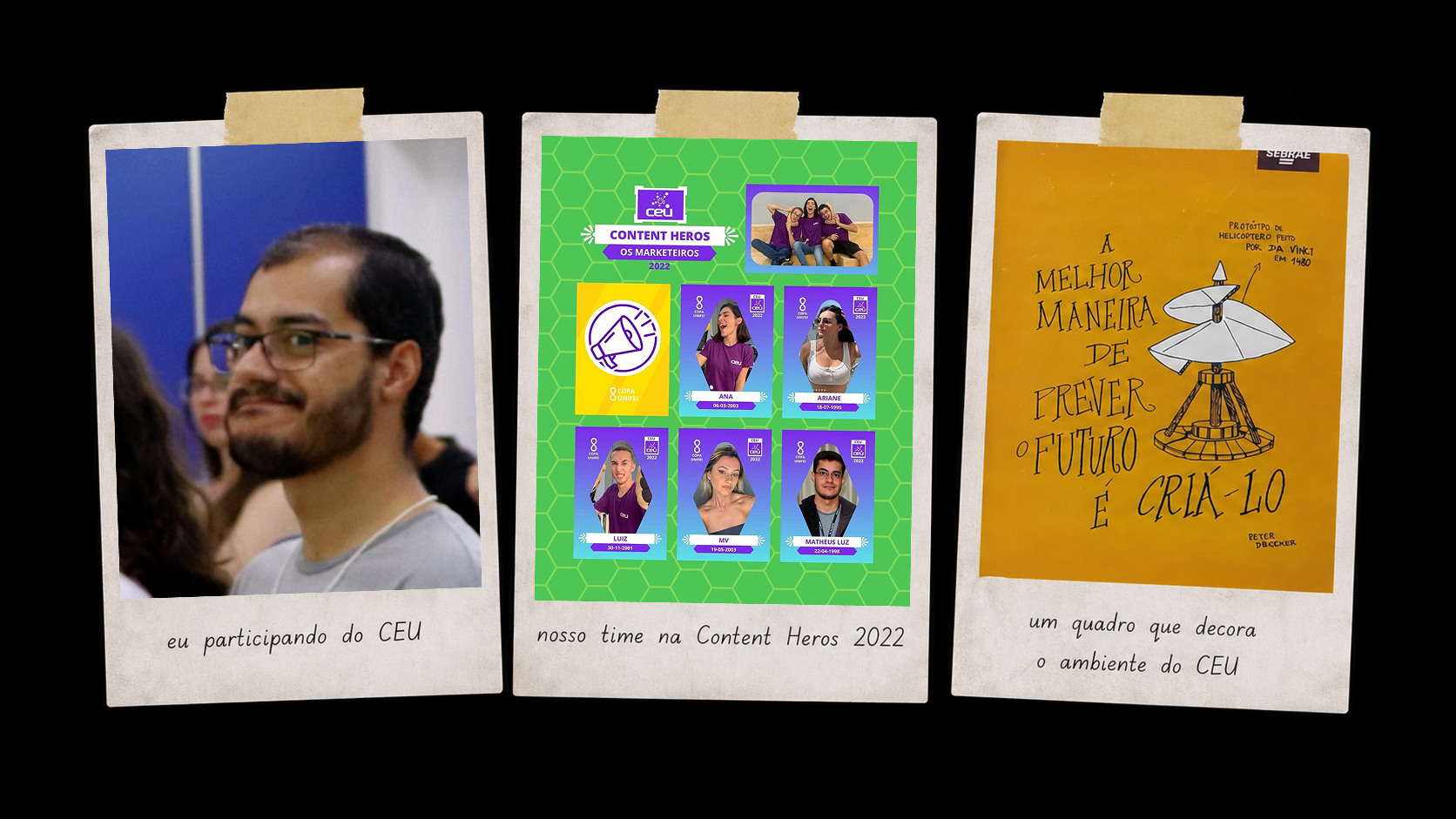
Photo of Startup Weekend or CEU
I learned a lot from this group, it was one of the most interesting moments of college

Joining UNIFEI's Entrepreneurship Center, at 24 years old, wasn't a surprise. It was the natural consequence of everything I had built up to that point. Since the day I realized, in that room less than a meter from my bed, that I could turn knowledge into solutions, I had been seeking out environments where that mindset was valued. CEU was exactly that.

An Innovation Hub recognized as Brazil's Best National Innovation Hub in 2024, CEU brought together people who built, who innovated and who helped each other grow. It was the network I had imagined when I decided to start college at FEPI years before, still shy and full of desire to connect with people like me.

I helped organize a Startup Weekend, gained access to some of the most respected entrepreneurs in the Brazilian ecosystem and listened to real success cases from people who had turned ideas into concrete businesses. I was responsible for creating some creative content and for guiding entrepreneurs who reached out to me for mentorship and pre-acceleration opportunities. Every conversation in that environment was a class no curriculum could ever offer.

It was also inside CEU that my first real professional connection appeared. The first internship and job I landed came in part from the relationships I built there. It wasn't luck. It was the direct consequence of years investing in building a network, since that very first week of class at FEPI when I forced myself to meet everyone despite the shyness.

CEU didn't reveal who I was. That had already happened years before, in a simple room, in front of a computer, when I first saw that my knowledge had value to the world. What CEU did was something different and equally important: it confirmed I was on the right path, that the identity I had quietly built made sense, and that there was a whole ecosystem of people who thought like me and were willing to build together.

Chapter 9

NexAtlas and growth

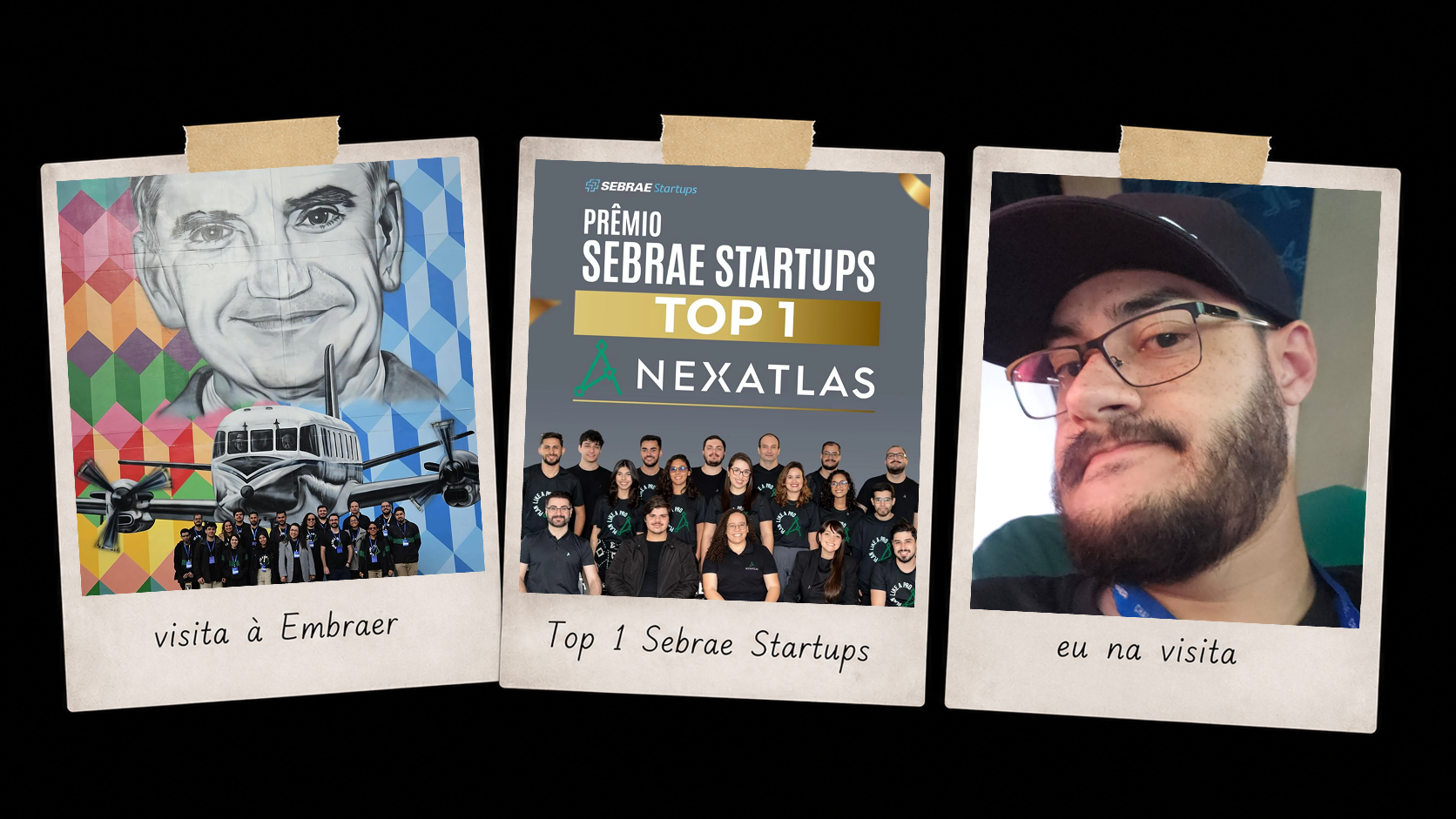
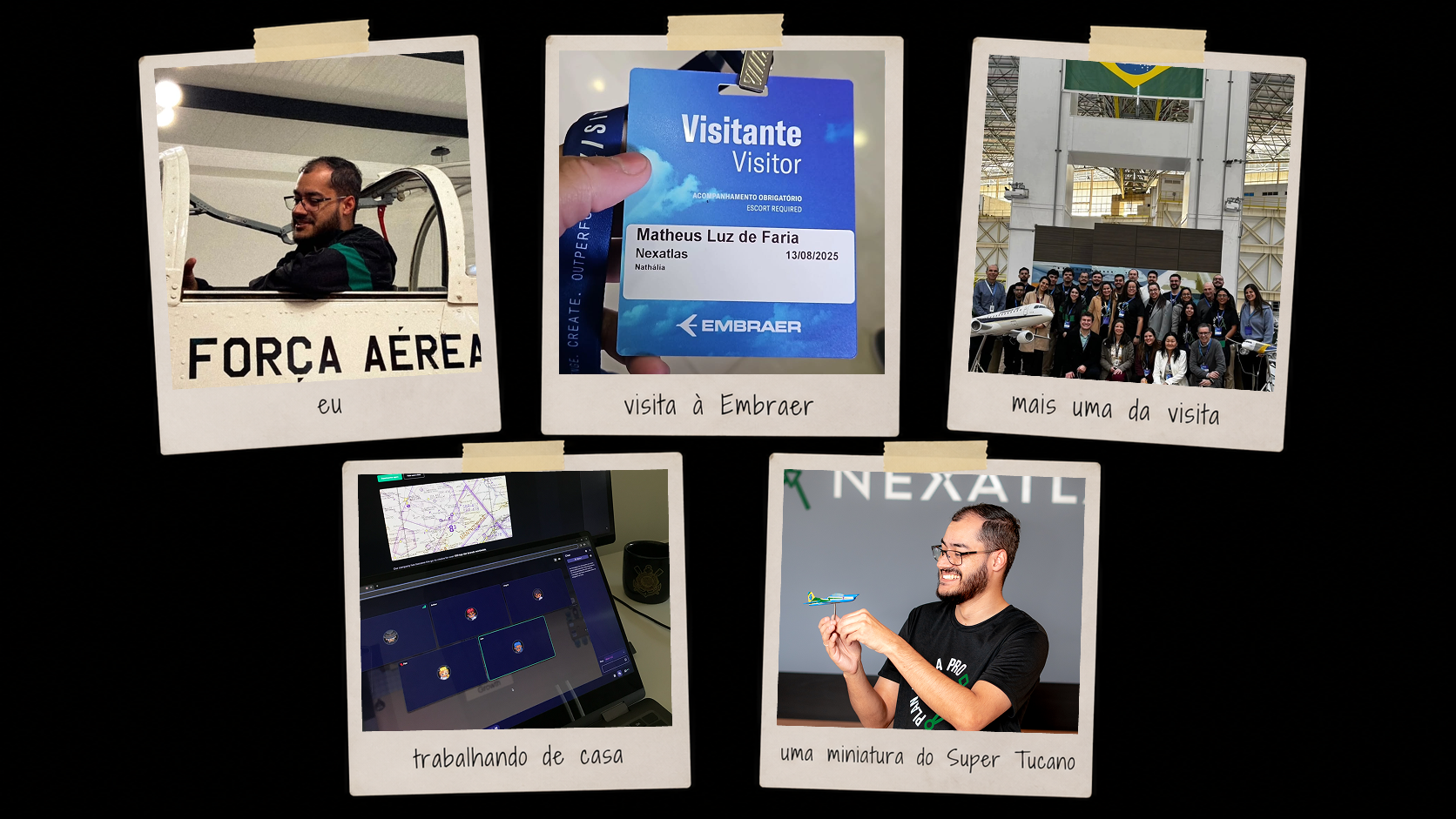
NexAtlas polaroids
These last few years have been some of the most challenging and rewarding of my journey

At 25 I started my journey at NexAtlas as a Growth Intern. A Minas Gerais aeronautical startup that, among many recognitions earned over its history, won the Sebrae Startups Award 2025. It was the right environment: small, technical, driven by experimentation and with room for whoever wanted to truly build.

In one year, I learned more than in any other period of my professional life. I built campaigns, automated processes, tested hypotheses and learned in practice what it means to drive decisions with data. At 26 I was promoted to Growth Engineer and took on big responsibilities.

At 27, I had been responsible for sending over 1 million emails with open rates above 30%, for the complete rebuild of the website from scratch with the goal of not only improving the branding but also the traffic numbers, speed, and other indicators, for the internationalization of the site to English and Spanish, for building internal tools that became standard within the team, and for implementing systems that made the Marketing and Growth team faster and more precise.

Outside NexAtlas, I'm a Notion Ambassador in Brazil, part of a select group that tests new features before official launch and much more, and the founder of some projects that I'll talk about soon.

TODAY

Creating the future

Polaroids of Creating the future
And so the story continues. What will the next chapters hold?

The story you just read started with a computer and a 5-year-old boy who learned to fix what broke because there was no other choice. It went through lines of C code, through a marketplace built less than a meter from the bed, through a college transfer during a pandemic and through other experiences that changed how I saw myself. But this story isn't over. It's being written right now, as you read this.

Thanks for reading my story this far. But what about you? Every journey has a beginning, whether in a garage, in an improvised bedroom, a moment when something clicked and everything changed. These stories deserve to be told, not kept. If this story touched you in any way, I invite you to tell yours, by message, in any form, share it!

And if you want to follow the next chapters, follow me on social media. There's still much to build, share and tell here. The best is yet to come.